CforCantonese

Introduction

CforCantonese started with a simple idea and grew into a personal project. It brings together my editorial experience, studies in early childhood education and interest in Hong Kong culture.

I created printable Cantonese flashcards for overseas families introducing the language to their children, as well as beginners of all ages. I handled everything from content and design to product planning, with AI supporting the process.

At a Glance

10Themed Sets
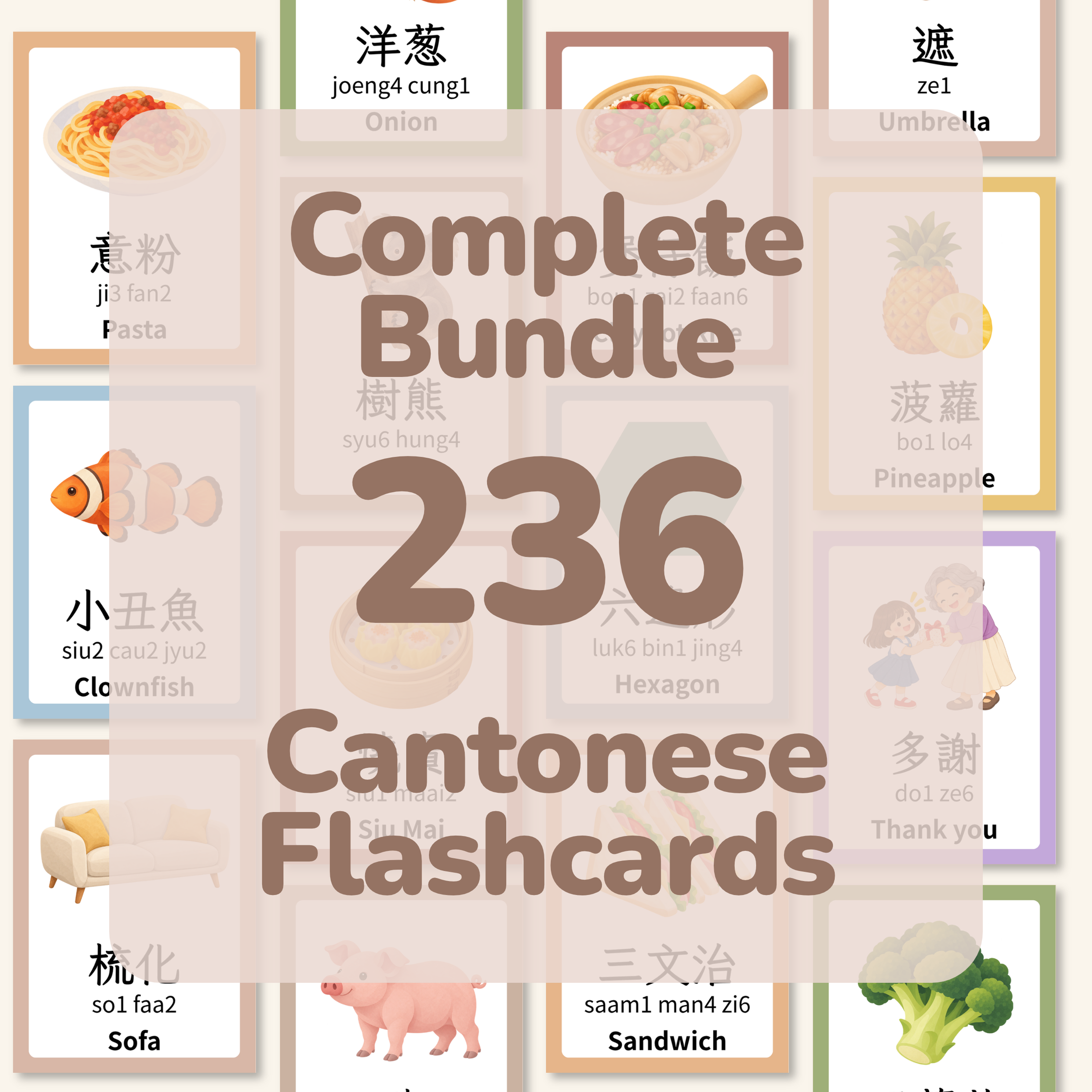
236Cantonese Flashcards
8Sets with Bonus Mandarin Versions
27Pages of Learning Notes
Overview of ten themed Cantonese flashcard sets

Building the Learning Experience

The Flashcard Collection

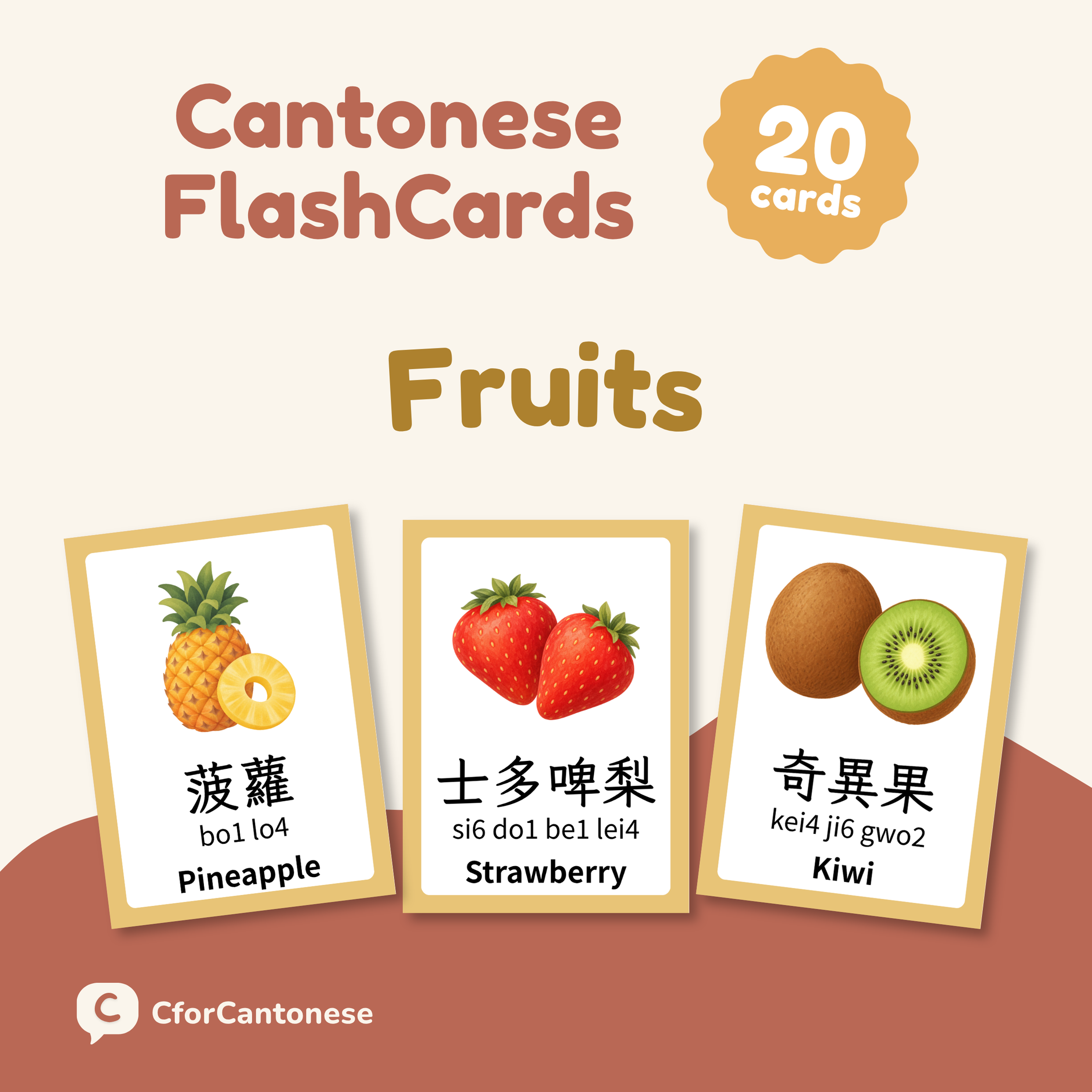
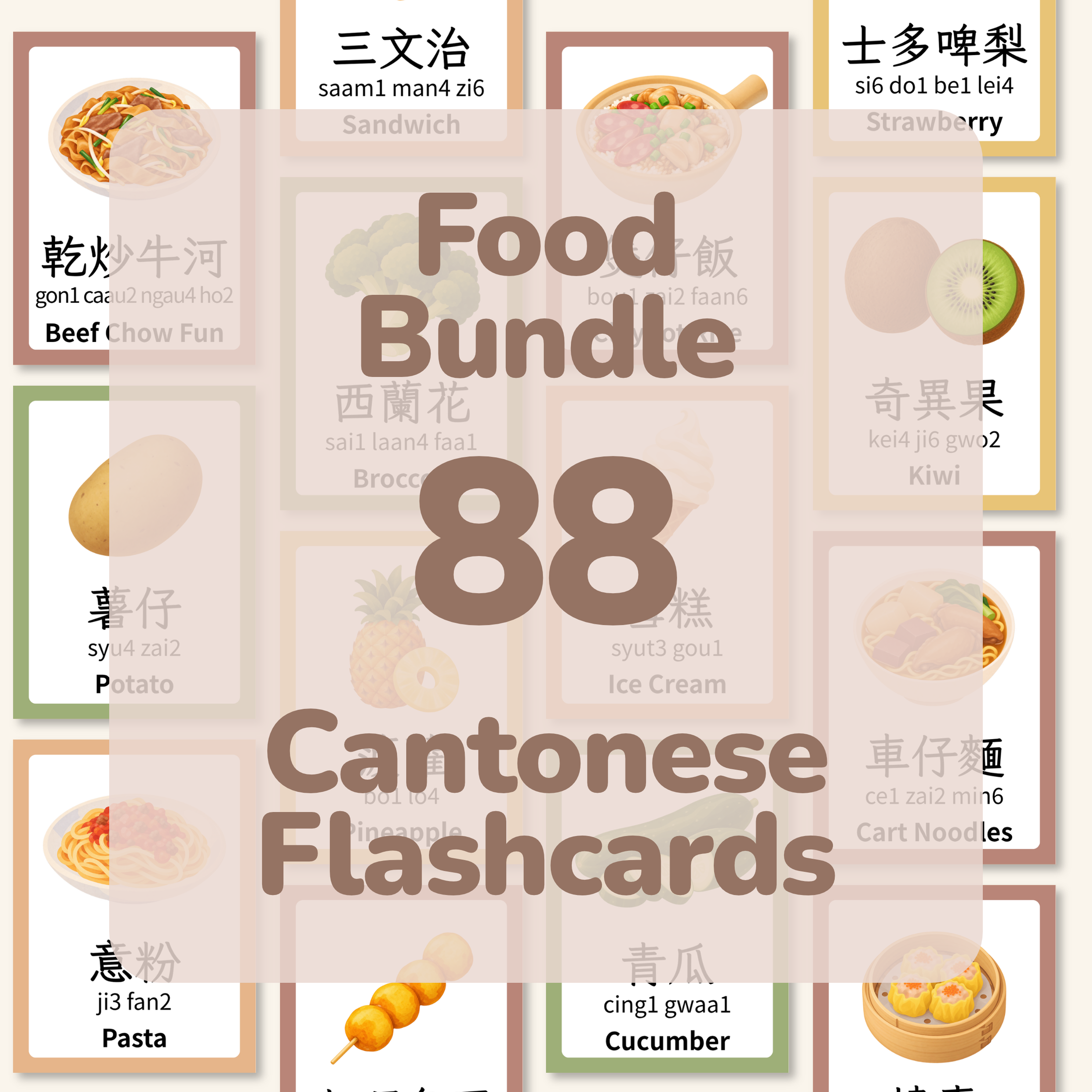
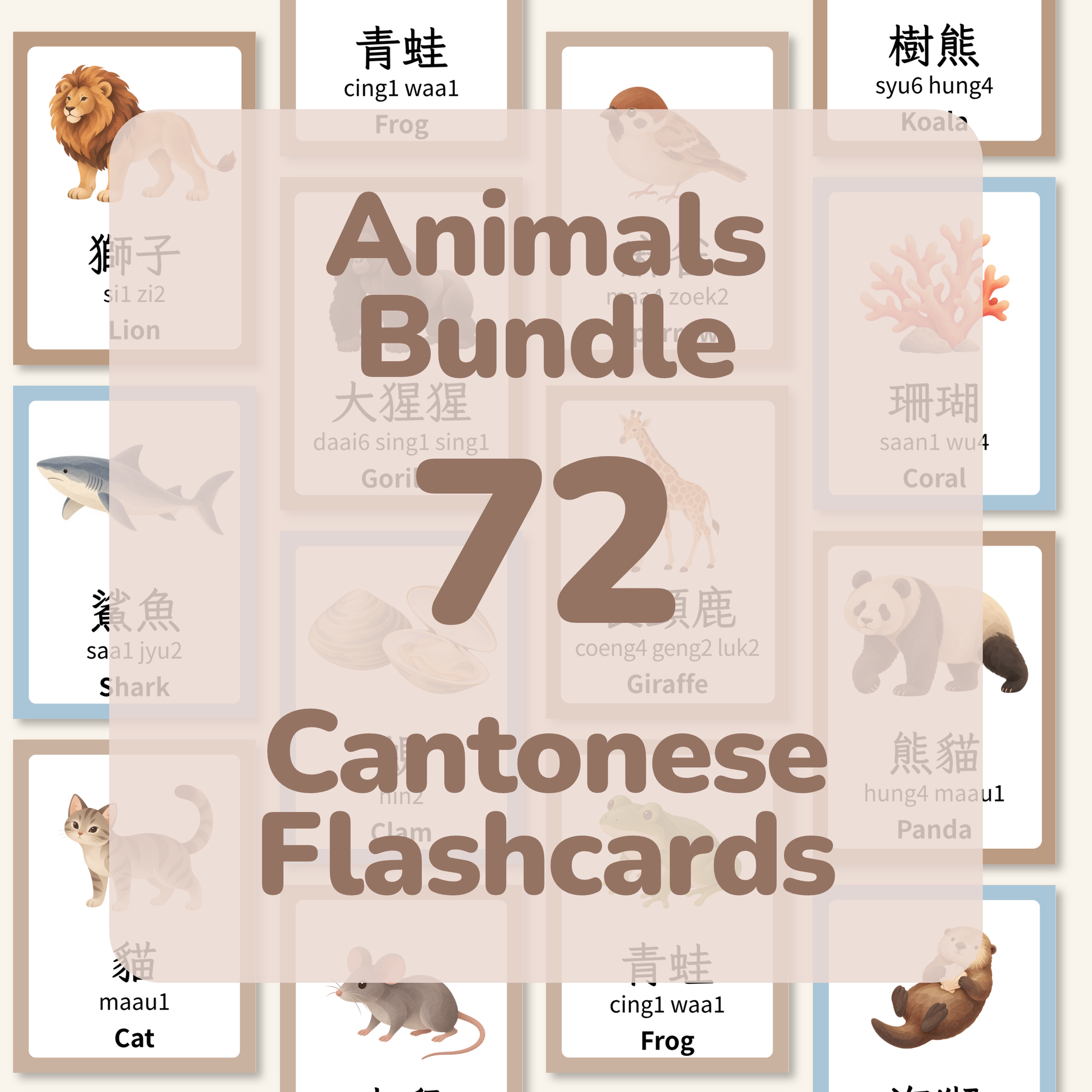
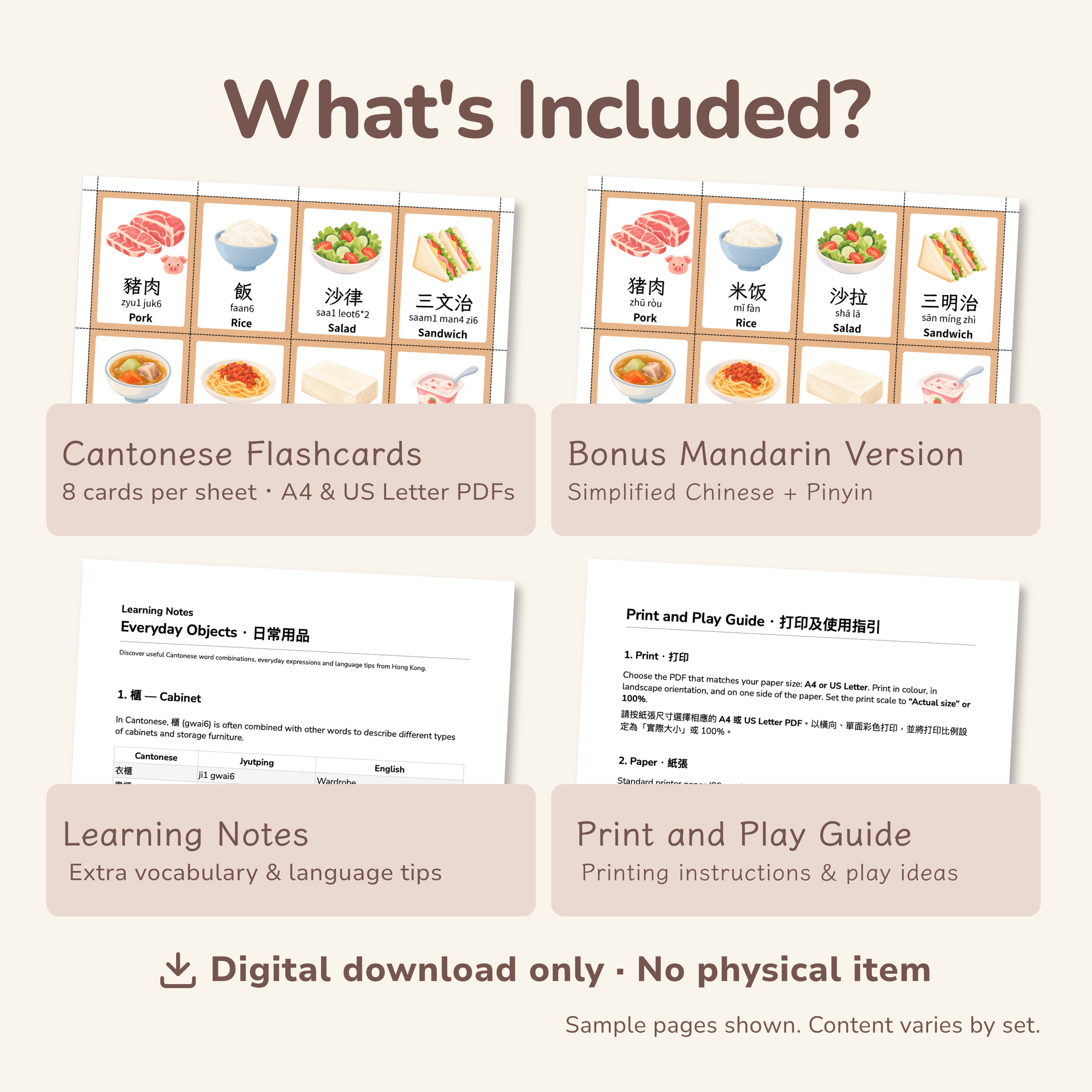
  • Organised vocabulary into everyday themes, including food, animals, common objects and Cantonese phrases.
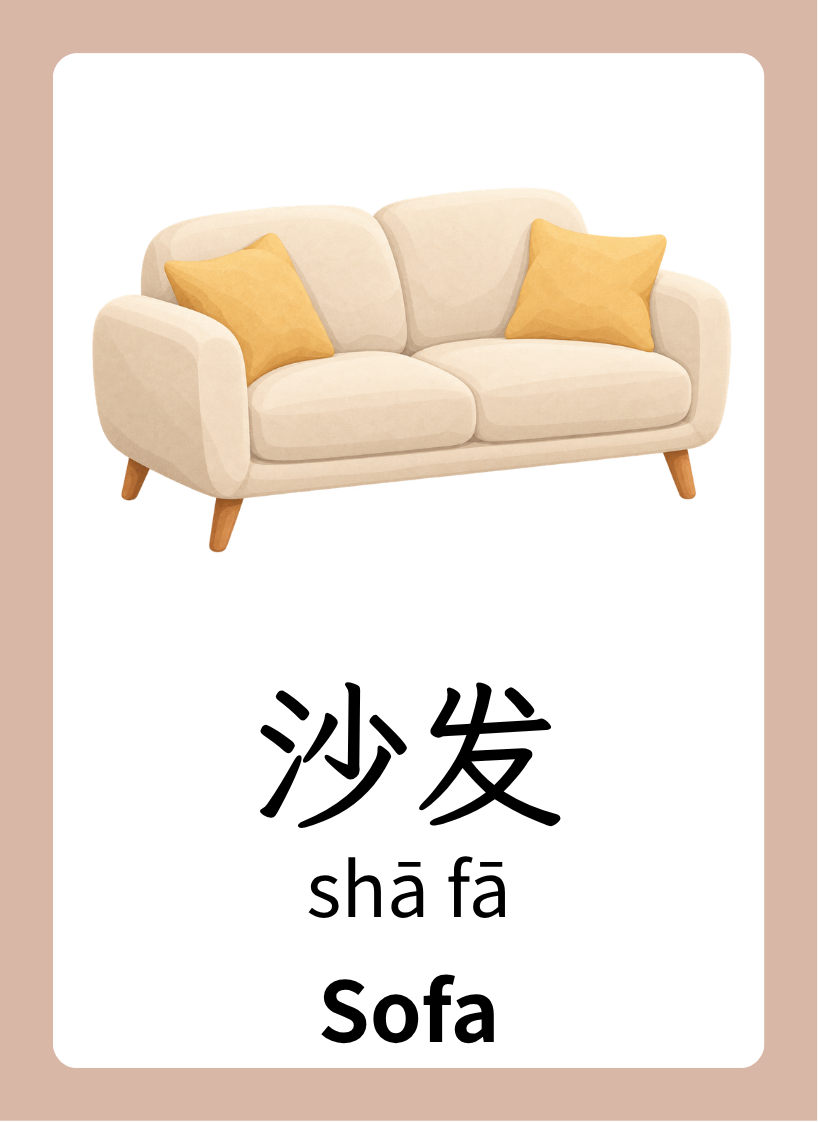
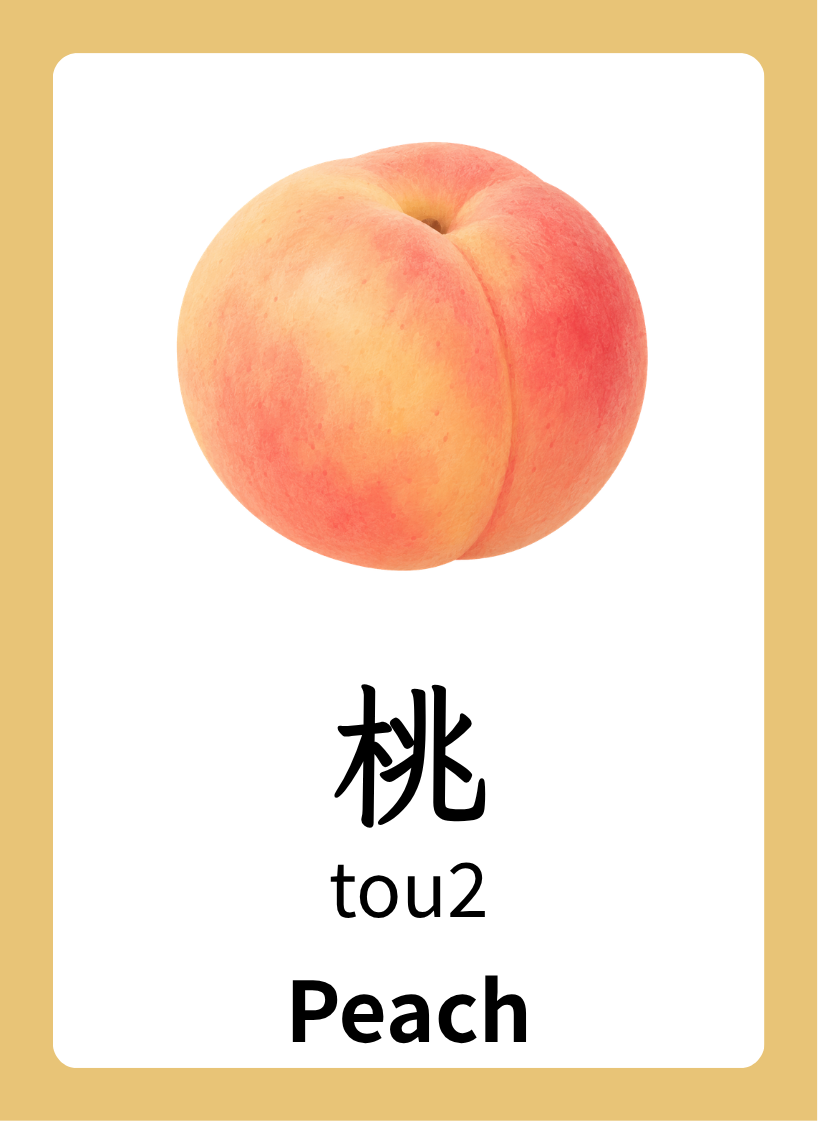
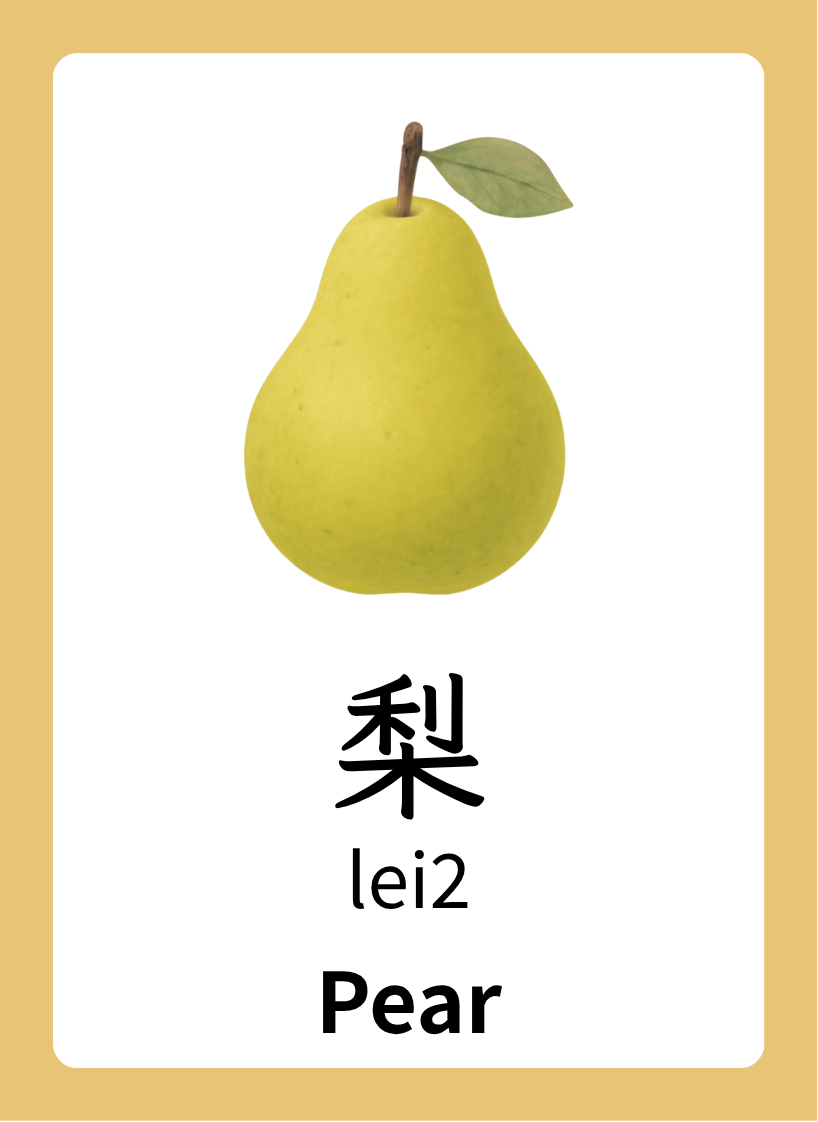
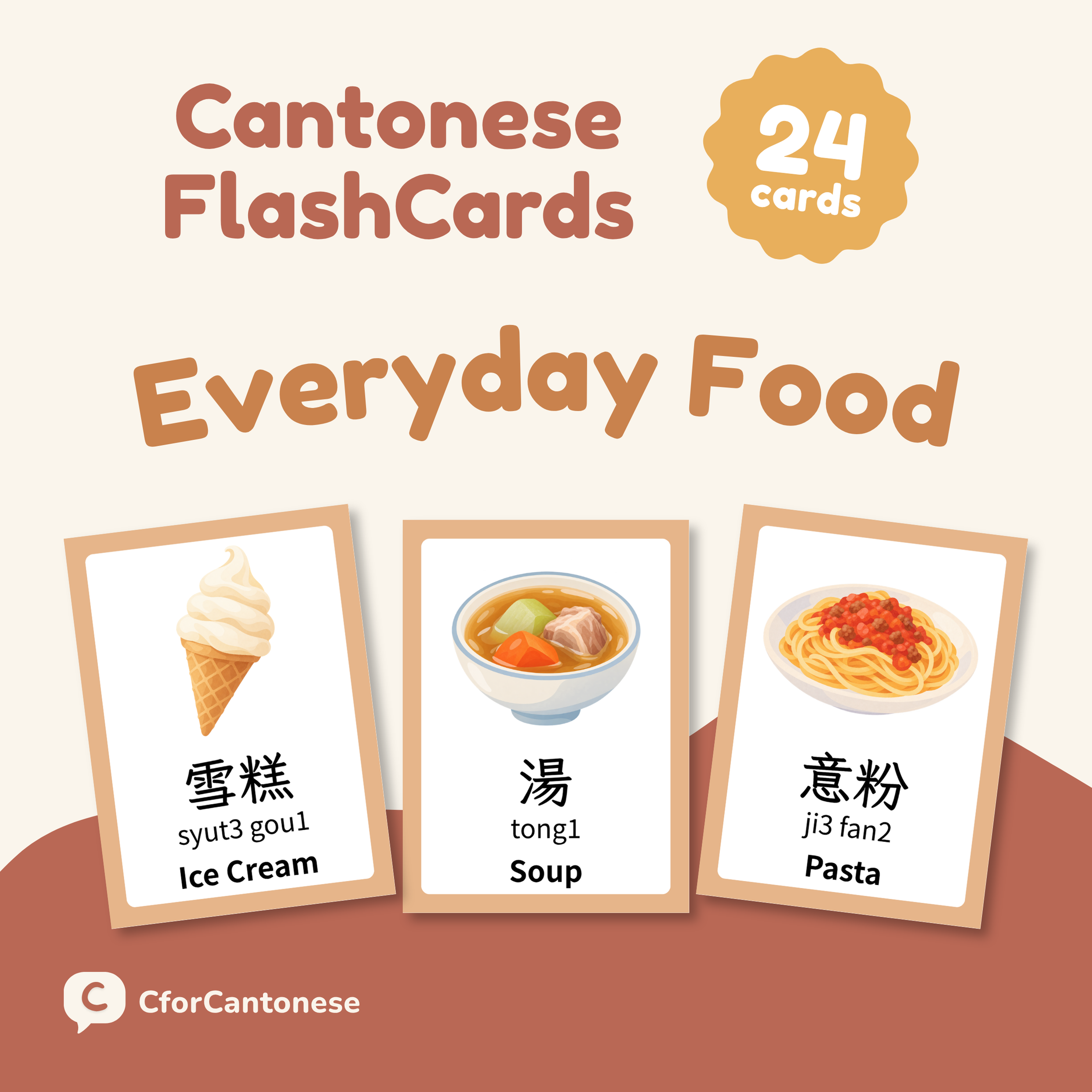
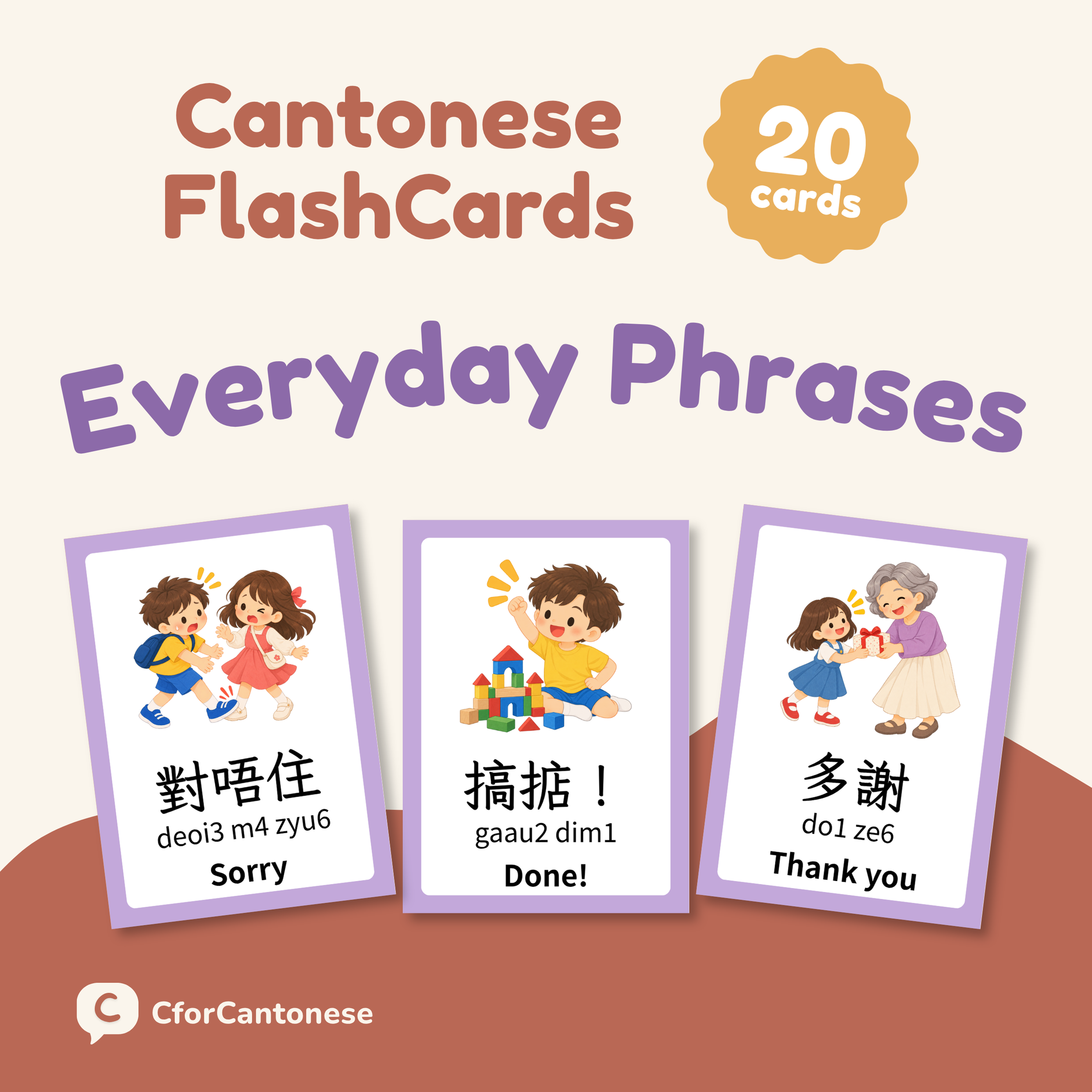
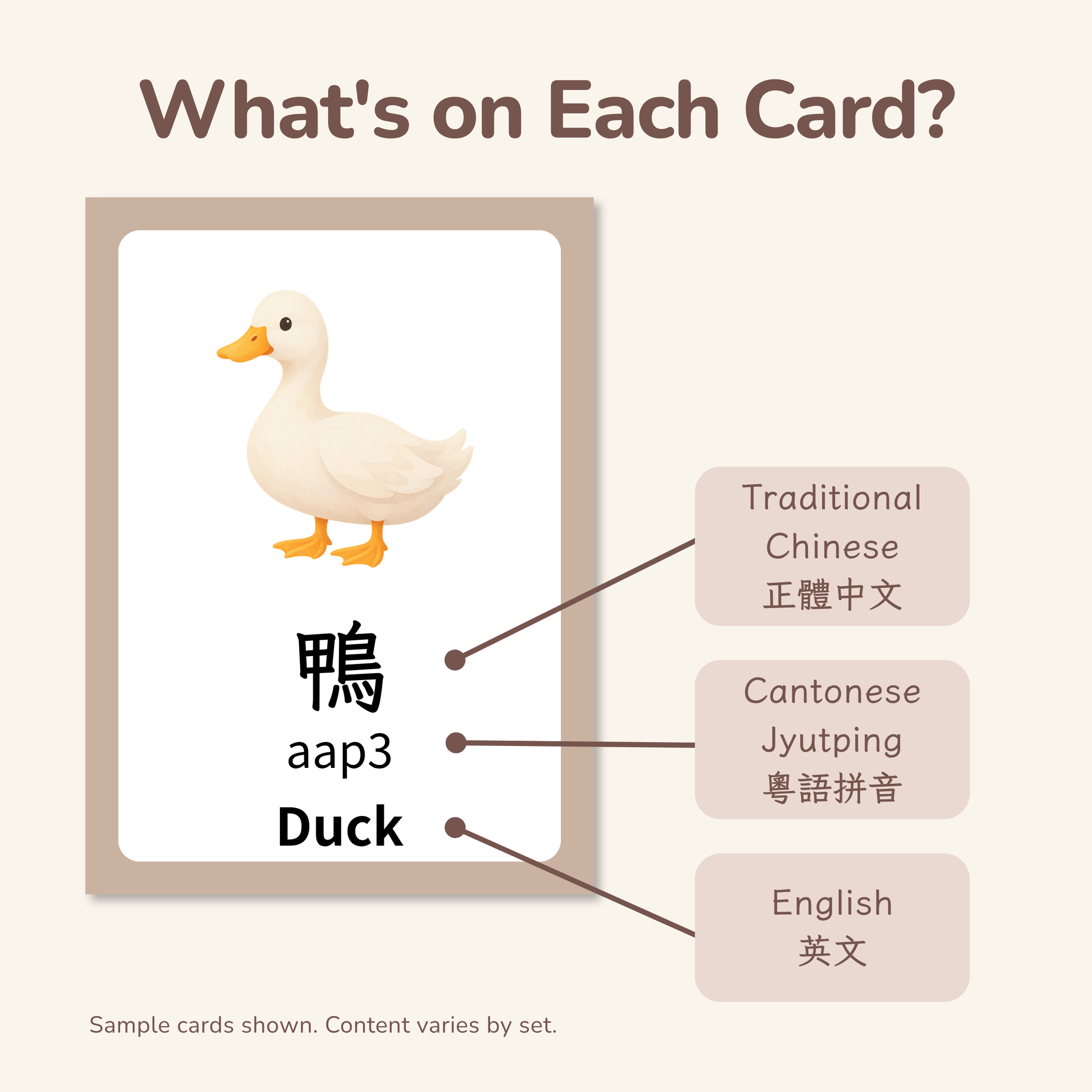
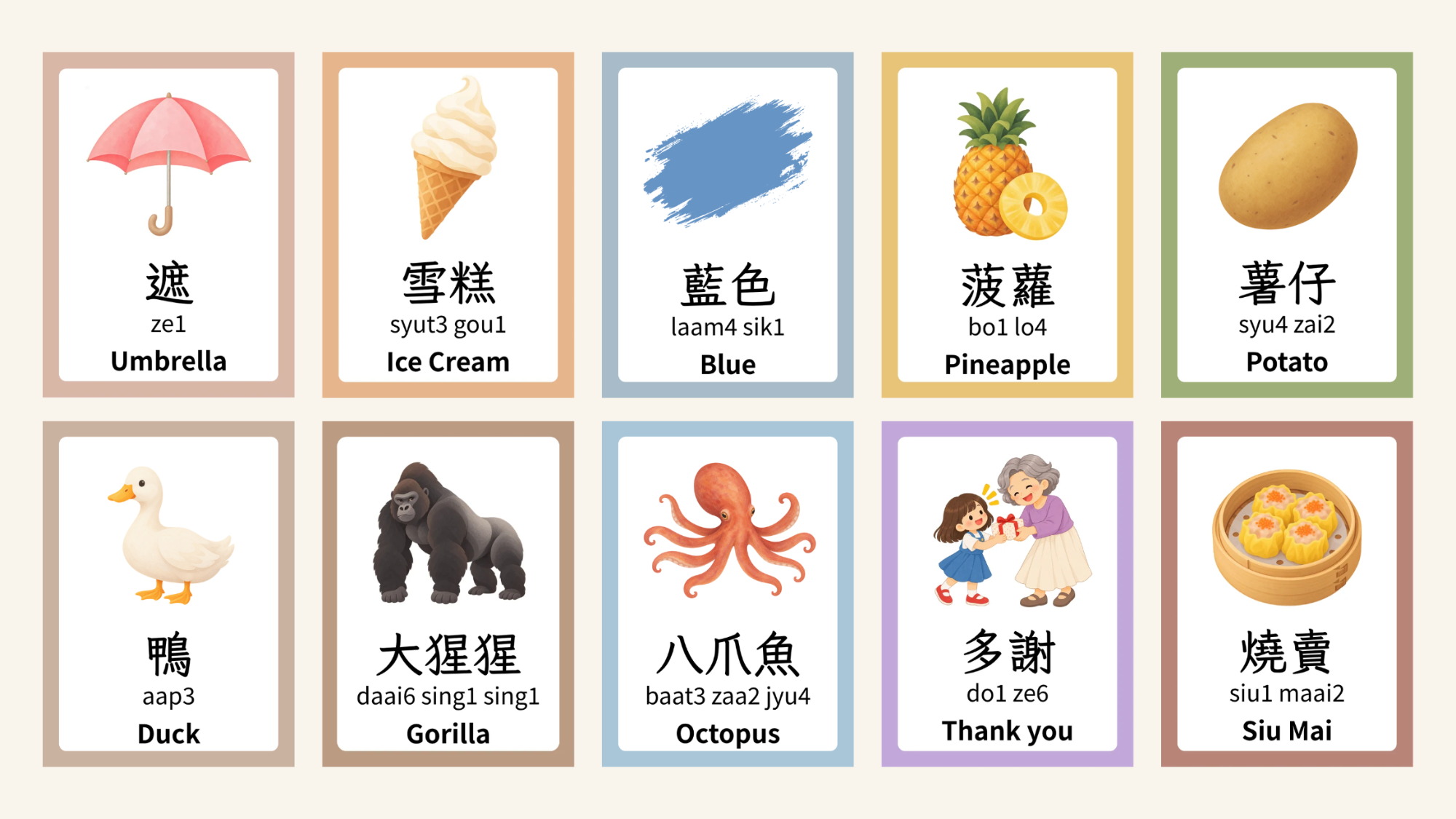
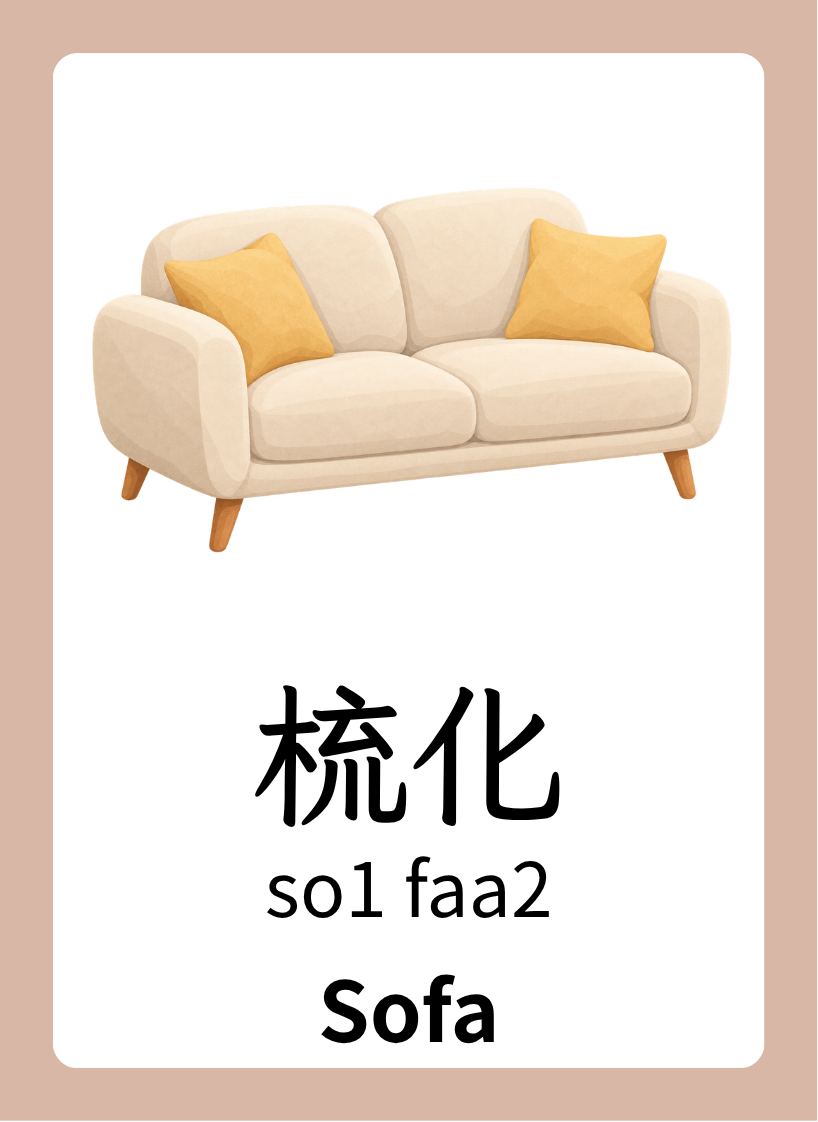
  • Designed clear, easy-to-read flashcard layouts featuring illustrations, Traditional Chinese characters, Jyutping and English translations.
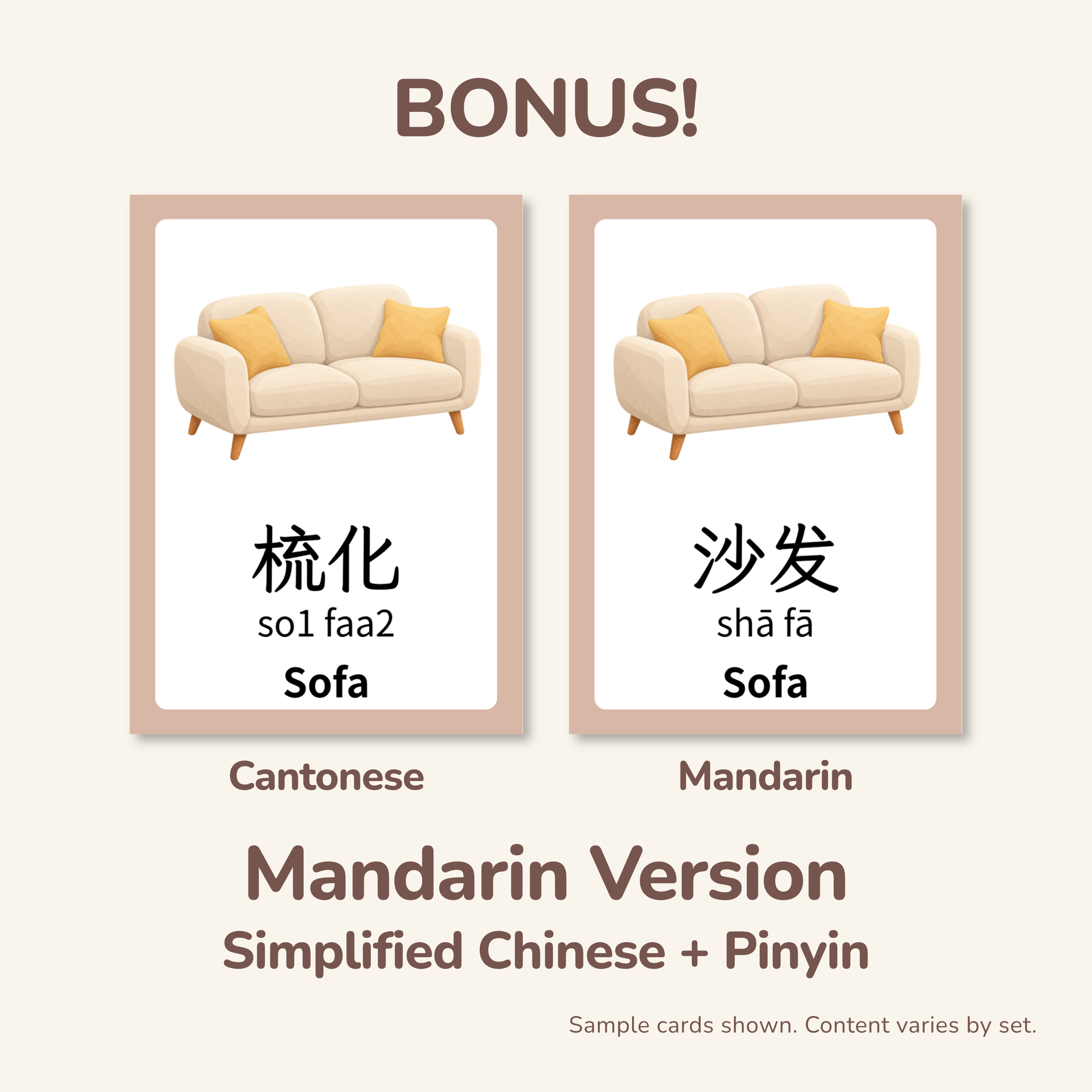
  • Created bonus Mandarin versions for eight sets, using Simplified Chinese and Pinyin.

Beyond the Flashcards — Learning Notes

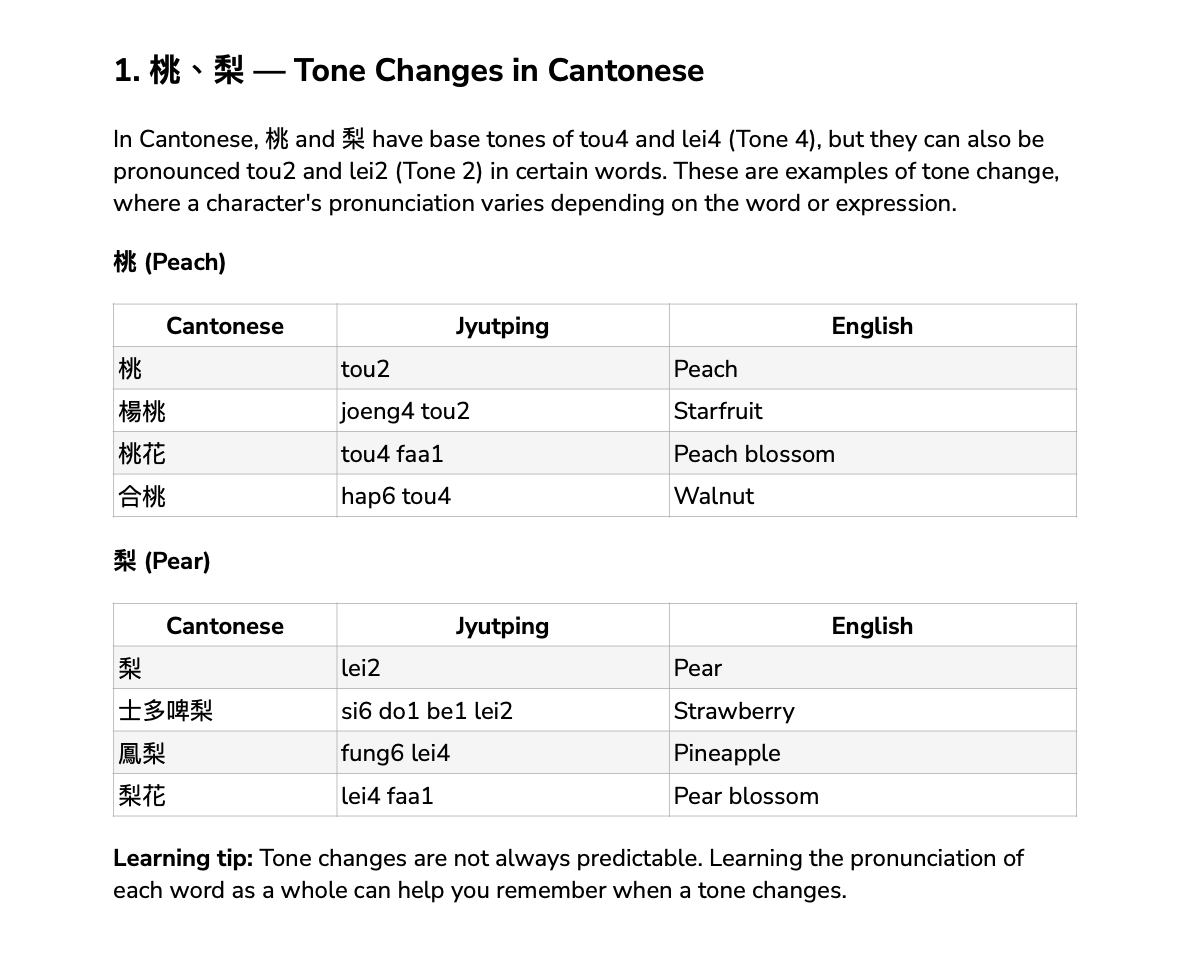
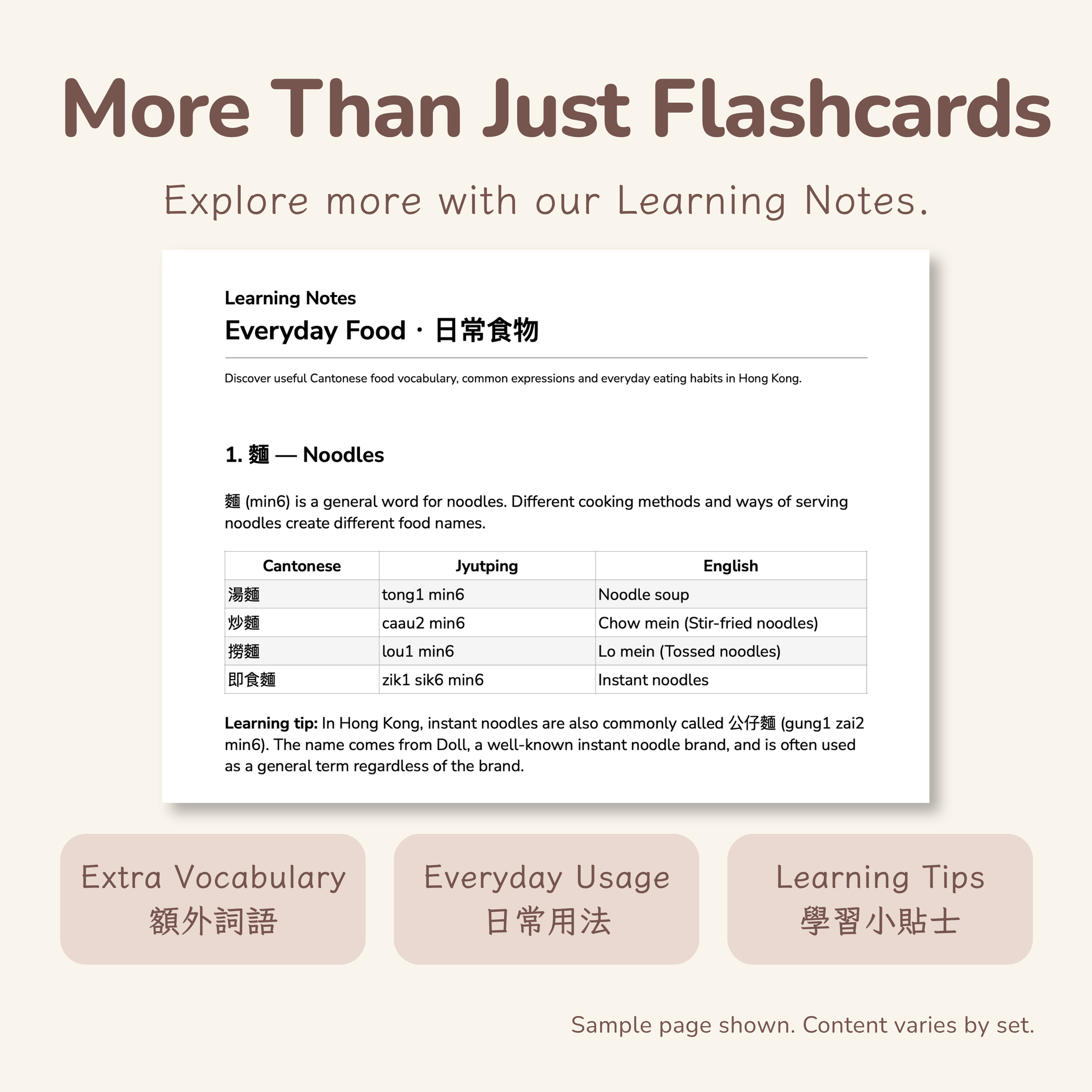
Developed supplementary Learning Notes to help beginners understand Cantonese beyond individual words, with examples covering:

  • Tone Changes: Explained tone changes in everyday words, such as 桃 and 梨.
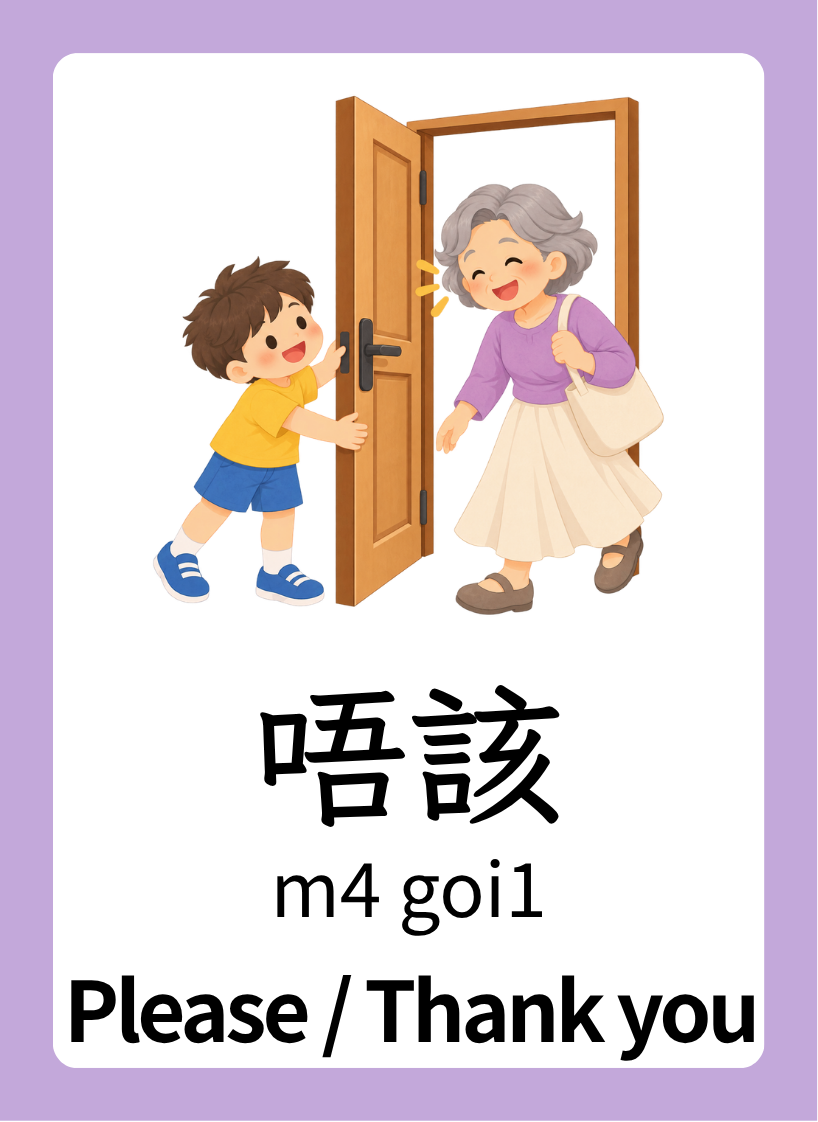
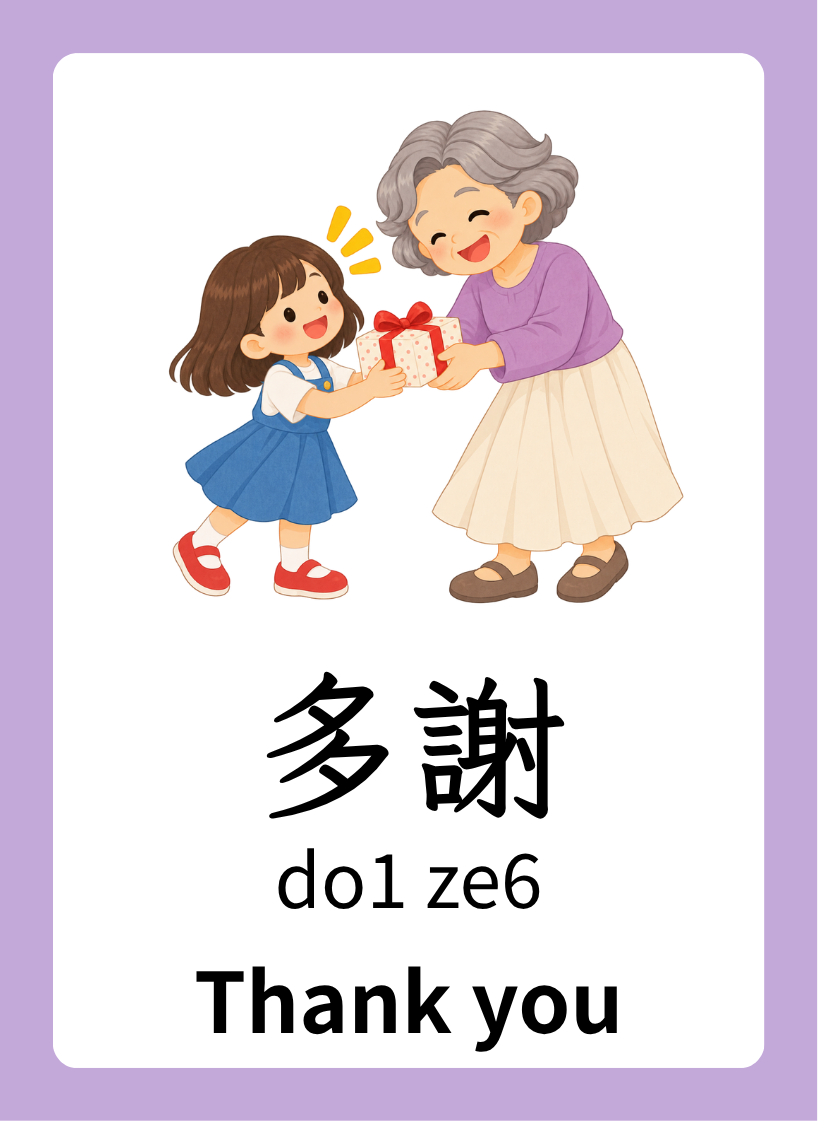
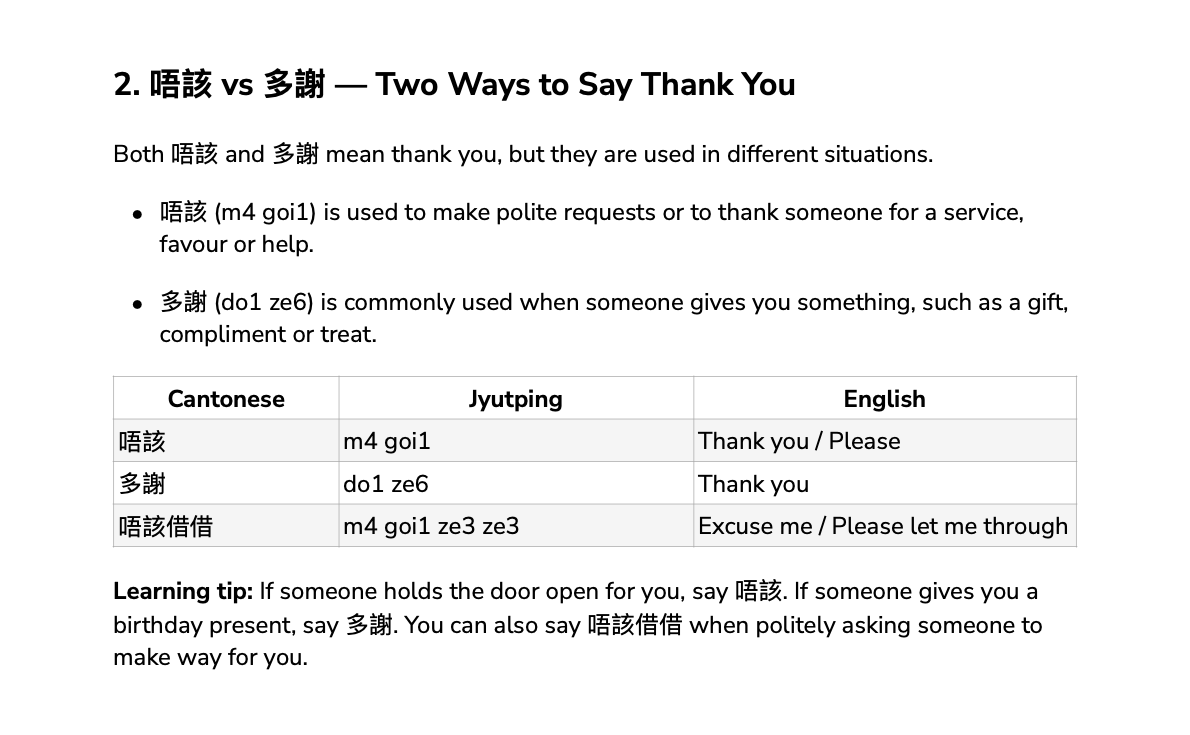
  • Everyday Usage: Explained when to use 唔該 and 多謝 in different situations.
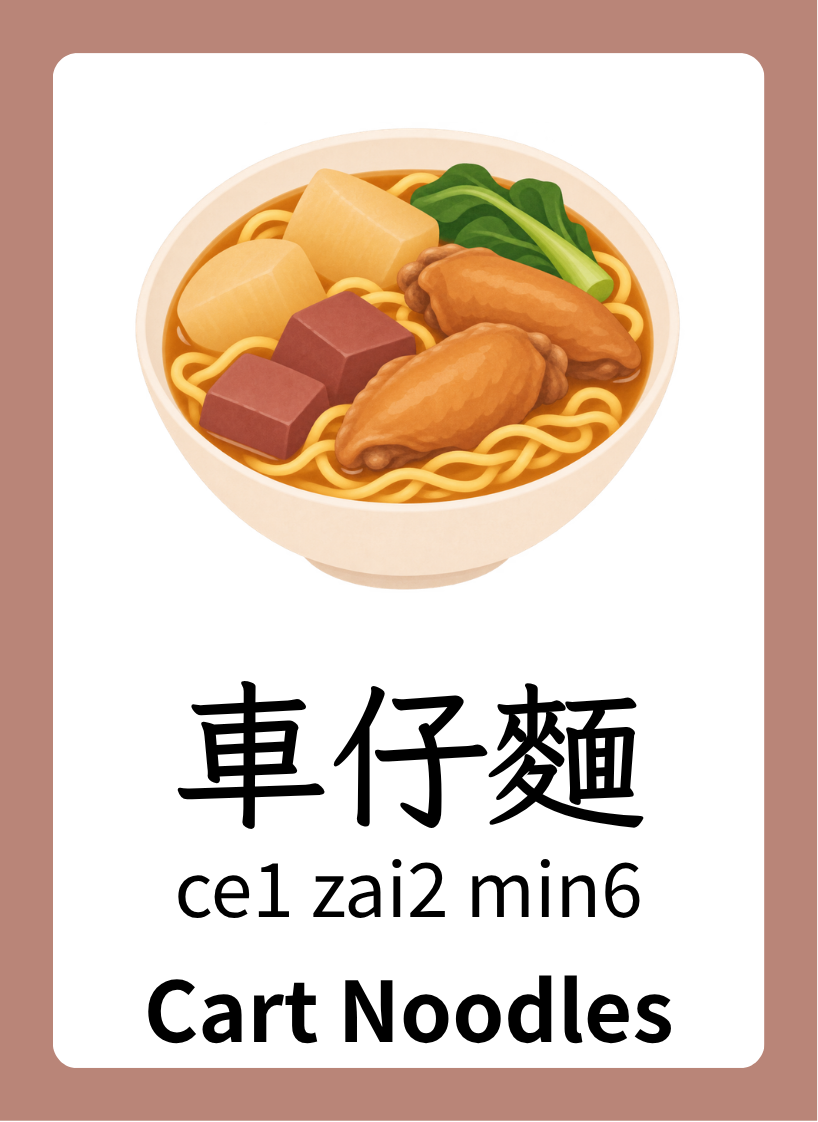
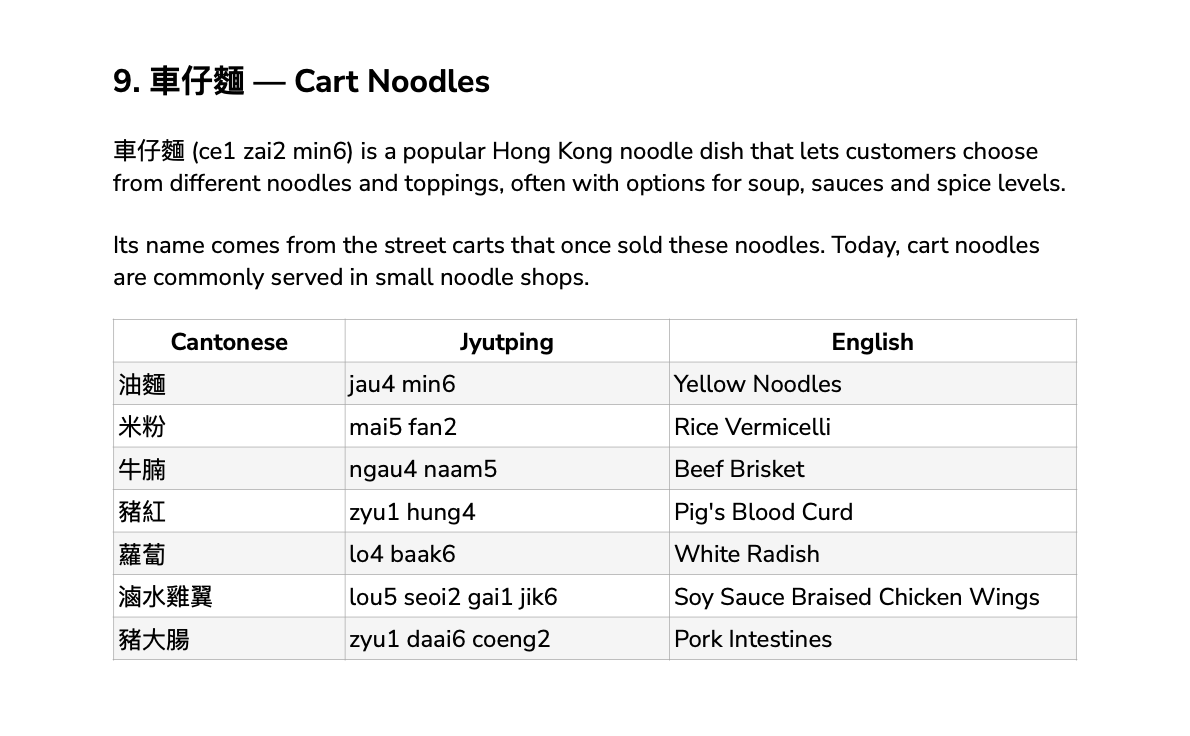
  • Language & Culture: Explored the origins of 車仔麵 and its connection to Hong Kong street food culture.

Extra Learning Resources

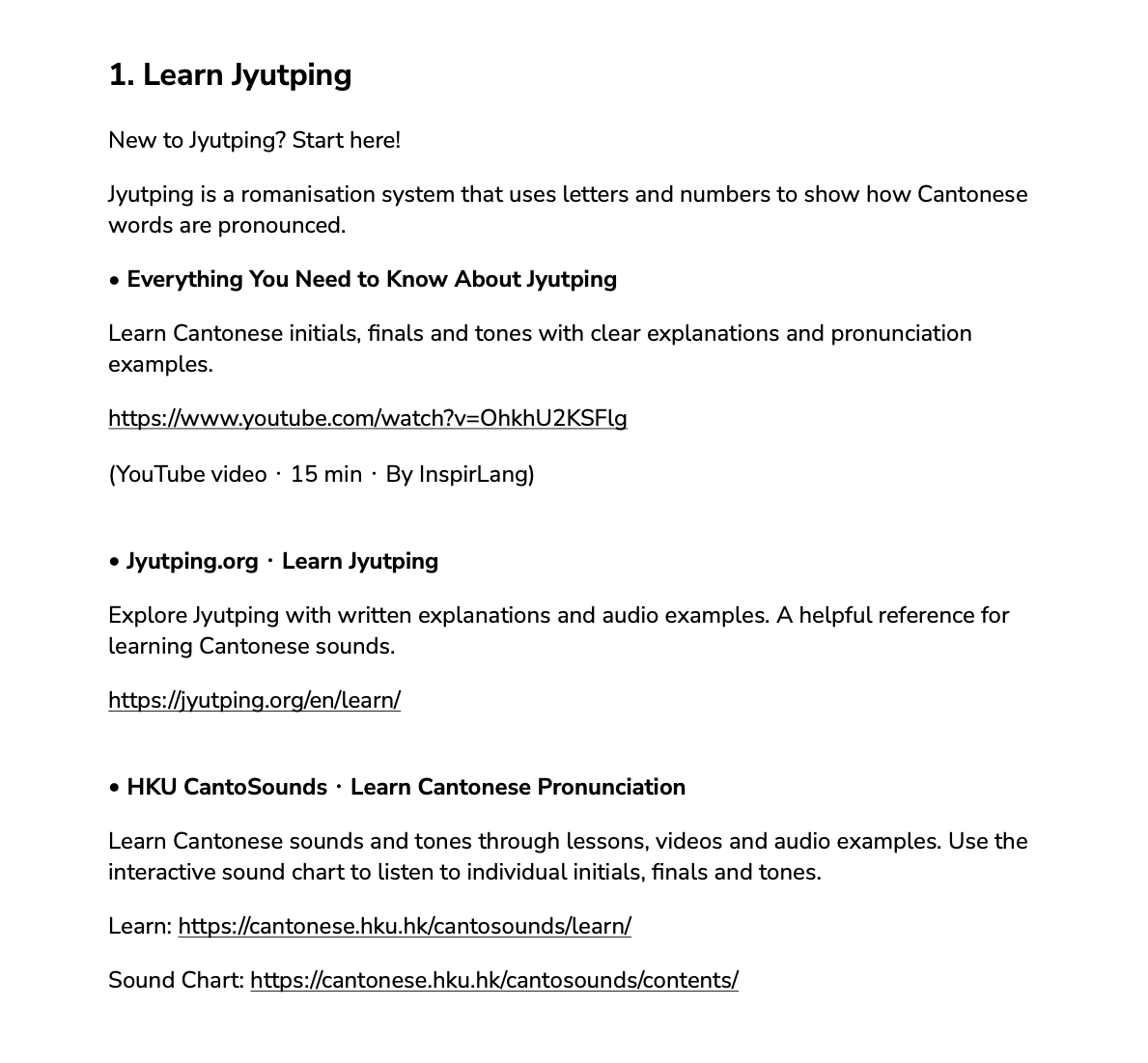
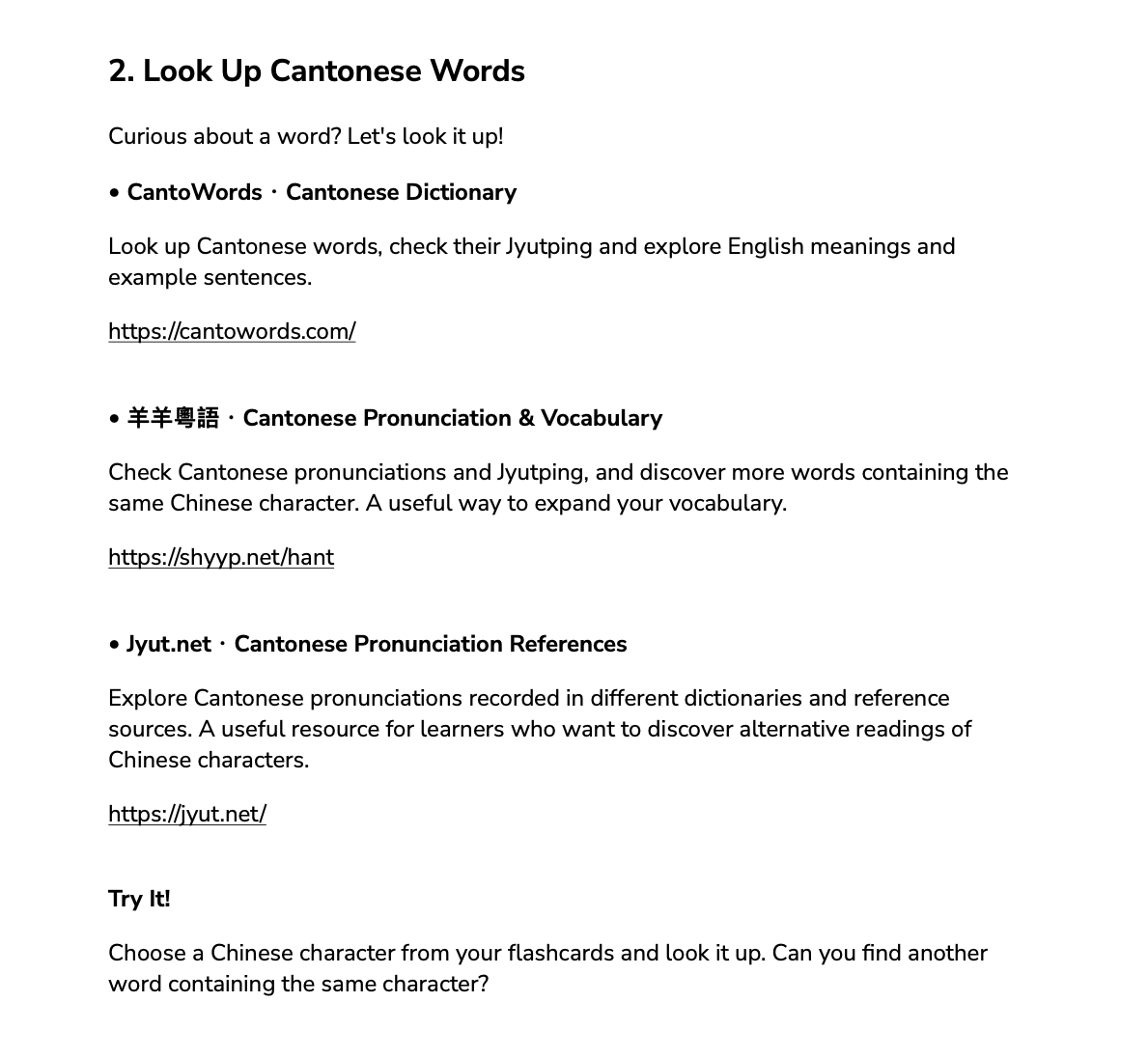
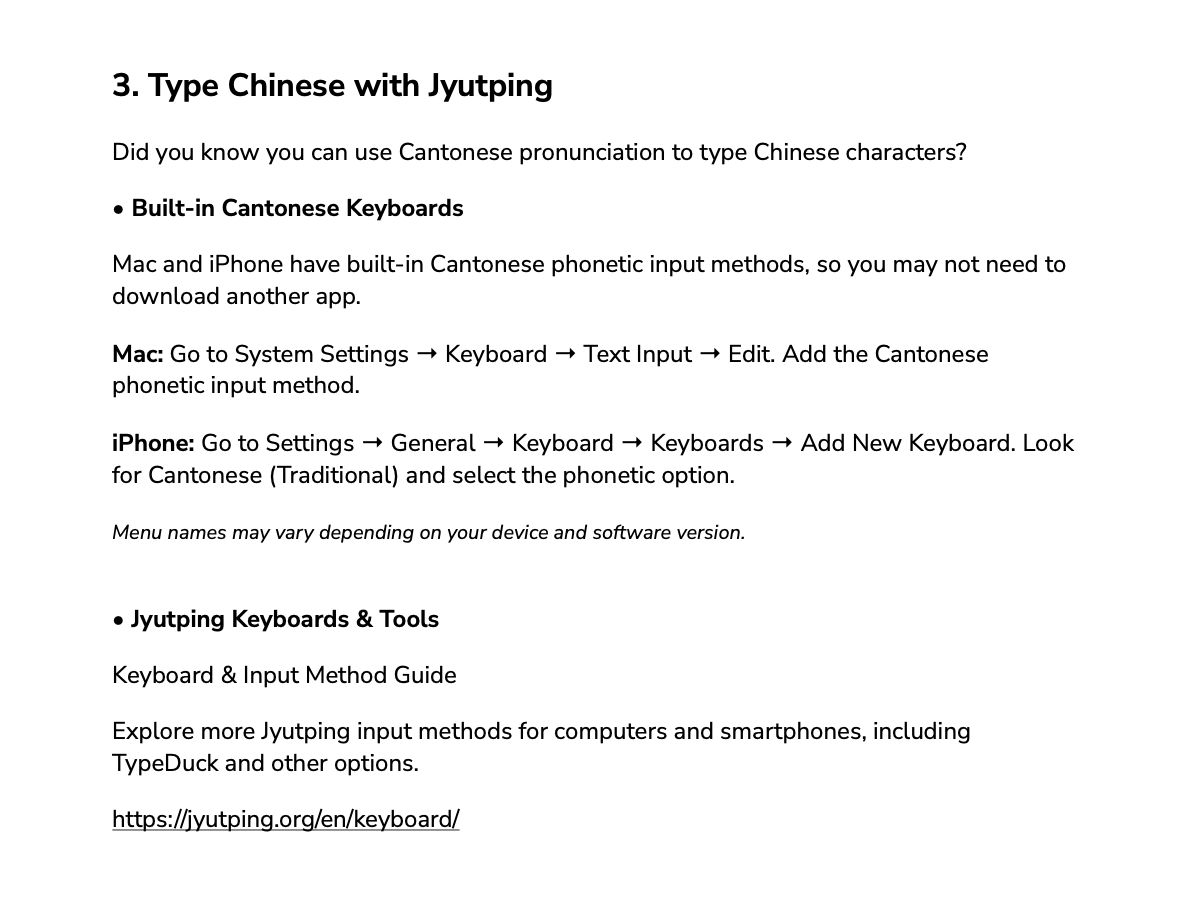
  • Created a simple guide to support independent learning beyond the flashcards.

Learn Jyutping & Pronunciation

Learn Jyutping & Pronunciation guide page

Explore Cantonese Dictionaries

Explore Cantonese Dictionaries guide page

Type in Cantonese

Type in Cantonese guide page

AI Integration & Collaboration

How I Used AI

AI supported different stages of the project, from research and content development to illustration and tool development.

Market Research Assistant

Explored product ideas, market trends and selling platforms.

Editorial Assistant

Assisted with vocabulary research, translation, Learning Notes and proofreading.

Illustrator

Generated illustrations and refined visuals based on my feedback.

Project Assistant

Helped organise tasks, track progress and plan next steps.

Development Assistant

Helped build and improve a PDF-to-CSV tool through AI-assisted coding.

Creative Partner

Brainstormed ideas, discussed challenges and explored possible solutions.

All AI outputs were reviewed before use.

AI in Practice

Case 01 — Character Bible & AI Illustration

  • Created a Character Bible to define character appearances, clothing and illustration style for the Everyday Cantonese Phrases flashcards.
  • Used the guidelines to generate a series of AI illustrations with a consistent look.
Character reference sheet with six family members
Character reference sheet defining appearances, clothing and illustration style for consistent AI-assisted illustrations.

Case 02 — PDF-to-CSV Converter

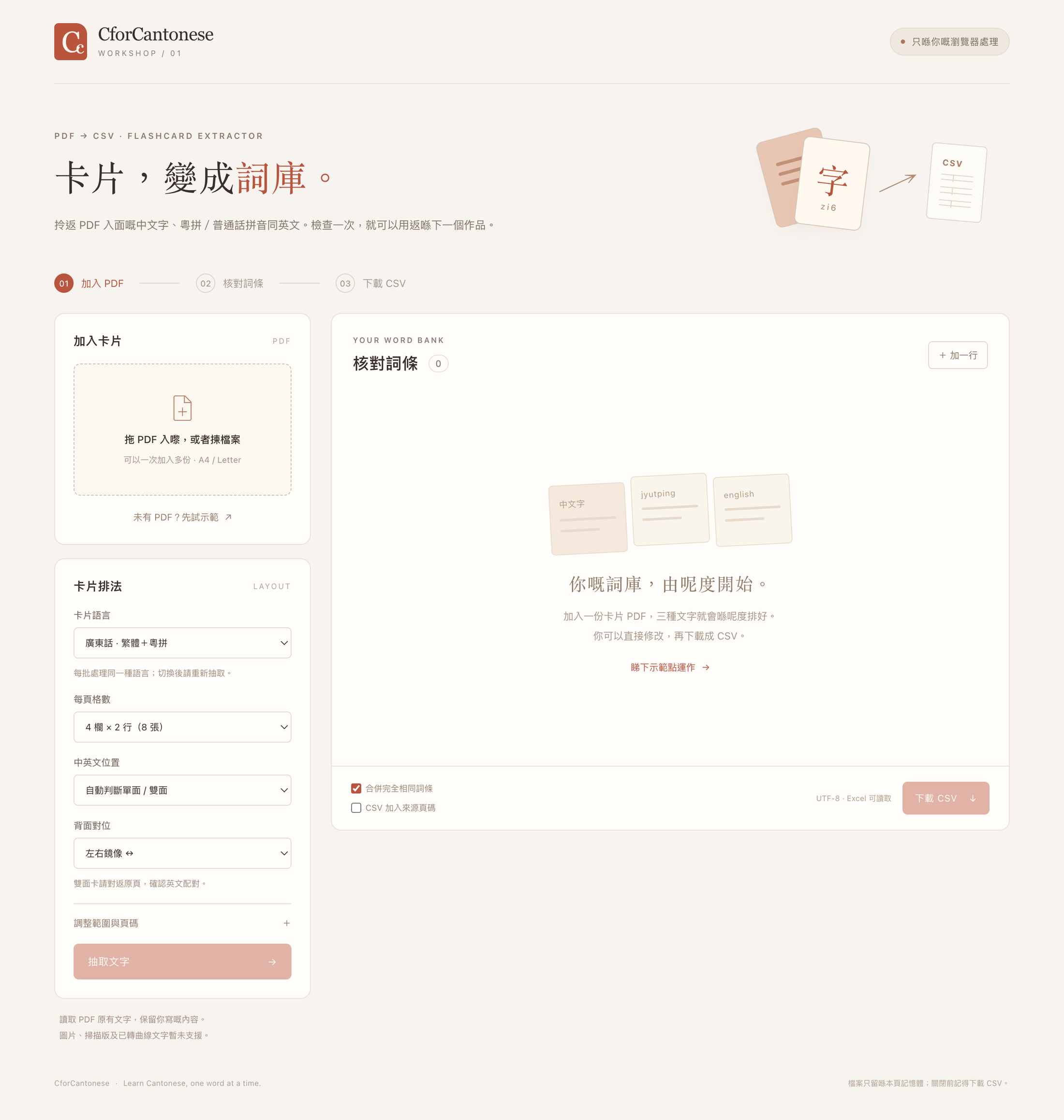
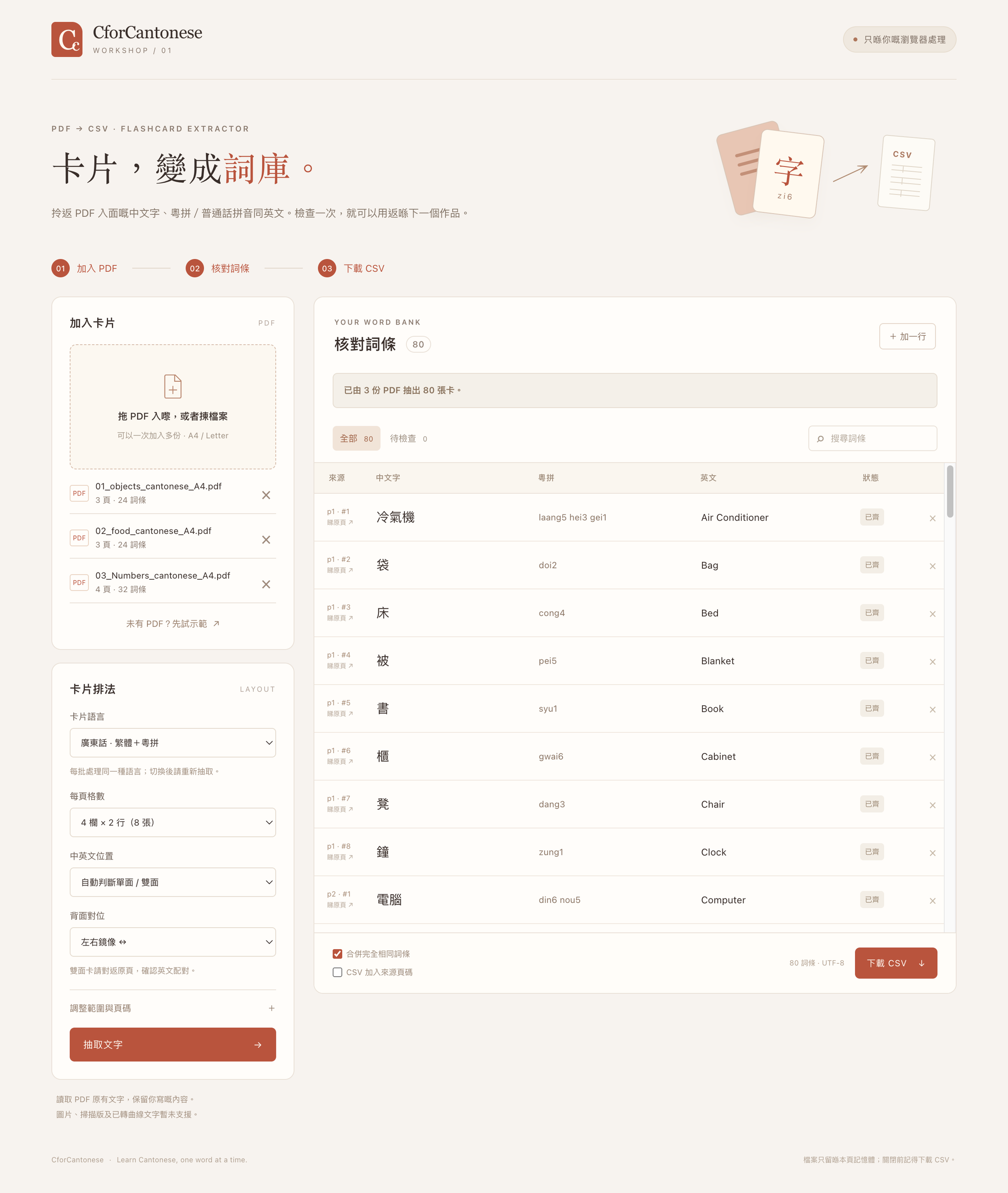
  • Used AI-assisted coding to build a tool that converts flashcard PDFs into CSV files for easier proofreading.
  • Tested the tool and resolved text extraction issues with AI assistance.
  • Added support for both Cantonese (Jyutping) and Mandarin (Pinyin).

AI Limitations — When AI Gets It Wrong

Case Study — Hong Kong Egg Waffles

  • AI struggled to reproduce the shape and structure of Hong Kong egg waffles, despite several rounds of feedback.
  • I changed the composition to show the egg waffle partly inside a paper bag, simplifying the illustration instead of repeating the same approach.

Branding & Marketing

Brand Identity & Visual Direction

  • Developed a warm, approachable visual identity for the logo and product listings, using a consistent palette of soft, muted colours.
  • Created distinct colour schemes for each flashcard set while maintaining consistent layouts and an illustration style that appeals to both children and adults.
CforCantonese speech-bubble C logo
#FAF5EC
#B96854
#76554F
#EAD9D1

Product & Platform Strategy

  • Researched digital product marketplaces, including Etsy and Payhip, to compare selling options.
  • Planned pricing and product options, from individual sets to a Complete Bundle, while exploring smaller themed bundles.
  • Positioned Learning Notes and bonus Mandarin versions as added value beyond basic flashcards.

Listings & Pre-launch Preparation

  • Designed product covers and listing images to communicate key features clearly.
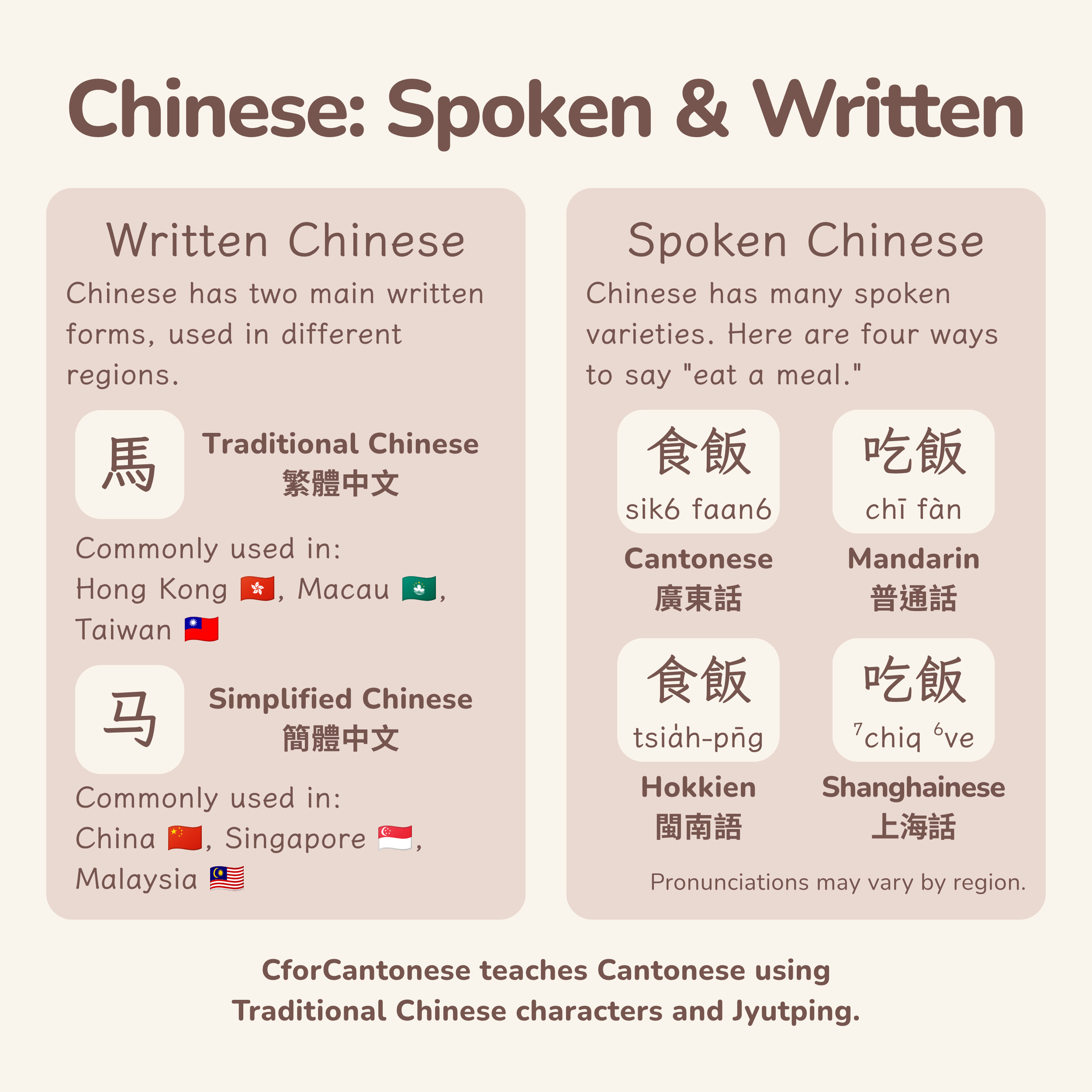
  • Created a listing image explaining the difference between standard written Chinese and spoken Cantonese to help potential buyers understand the language used in the flashcards.
  • Researched relevant keywords and prepared product titles and descriptions for Etsy listings.

Conclusion

Through CforCantonese, I applied my editorial skills beyond traditional content work, taking on product development, visual design and marketing planning. From the initial idea to launch preparation, I managed different stages of the project, making decisions and solving problems along the way.

AI helped me take on tasks outside my usual editorial role, while creative direction, editorial judgement and final quality control remained in my hands.
Editorial Portfolio